

The Biggest Money Mistakes Investors Make During Market Volatility—and How to Avoid Them
Category: Finance News
Tags: Investing, Stock Market, Personal Finance, Market Volatility, Wealth Building, Long-Term Investing, Financial Planning, Inflation, Interest Rates, Diversification, Risk Management, Emergency Fund, Investment Strategy, Financial Literacy, Economy
The Biggest Money Mistakes Investors Make During Market Volatility—and How to Avoid Them
Financial markets rarely move in a straight line. Periods of strong growth are often followed by corrections, while economic uncertainty can create sharp swings in stock prices, bond yields, and investor confidence. For many people, these fluctuations can be stressful, especially when headlines predict recession, inflation, or geopolitical instability.
However, history has shown that market volatility is a normal part of investing. Although no one can predict exactly when markets will rise or fall, experienced investors generally focus less on short-term price movements and more on long-term financial goals.
Behavior often has a greater impact on investment success than trying to perfectly time the market. Emotional decisions can lead investors to sell during downturns, chase rapidly rising assets, or ignore their long-term strategy.
Understanding the most common mistakes during volatile markets may help investors make more informed financial decisions.
1. Reacting Emotionally to Daily Headlines
News cycles move quickly.
One day headlines focus on record market highs. The next day they warn about inflation, interest rates, or slowing economic growth.
While staying informed is valuable, making major investment decisions based solely on daily headlines can increase risk.
Many successful investors maintain long-term plans rather than responding to every short-term market movement.
2. Trying to Time the Market
One of the most common investing mistakes is attempting to buy at the exact bottom and sell at the exact top.
Unfortunately, consistently predicting short-term market movements is extremely difficult.
Missing only a few of the market’s strongest recovery days can significantly affect long-term investment performance.
Instead of trying to perfectly time the market, many investors contribute regularly through systematic investment plans.
3. Ignoring Diversification
Concentrating investments in one company, one industry, or one asset class increases exposure to unexpected events.
Diversification spreads investments across different sectors, geographic regions, and asset types.
Although diversification cannot eliminate losses, it may reduce the overall impact of market volatility on a portfolio.
Every investor’s allocation should reflect personal financial goals and tolerance for risk.
4. Forgetting About Emergency Savings
Investments are designed for long-term growth, while emergency savings provide financial flexibility during unexpected situations.
Without sufficient emergency savings, investors may feel pressured to sell investments during unfavorable market conditions to cover urgent expenses.
Financial planners often recommend maintaining several months of essential living expenses in readily accessible savings.
5. Allowing Inflation to Reduce Purchasing Power
Inflation quietly affects household finances by increasing the cost of goods and services over time.
While holding cash provides security, relying entirely on cash savings for long periods may reduce purchasing power if inflation outpaces interest earned.
Balancing emergency savings with appropriate long-term investments may help households pursue both stability and growth.
6. Taking Too Much Risk Too Quickly
Rapid market gains sometimes encourage investors to take larger risks than originally planned.
Before increasing exposure to higher-risk investments, consider:
- Investment objectives
- Time horizon
- Financial obligations
- Risk tolerance
- Emergency savings
A strategy that matches your personal circumstances is generally more sustainable than following market excitement.
7. Ignoring Retirement Planning
Market volatility should not automatically interrupt retirement planning.
Many long-term retirement investors continue making regular contributions regardless of short-term market conditions.
Consistent investing over decades may allow compound growth to work more effectively than waiting for ideal market conditions.
Retirement planning should remain focused on long-term objectives.
8. Overlooking Debt Management
High-interest debt can reduce financial flexibility during uncertain economic periods.
Paying excessive interest limits the money available for investing, saving, or building emergency reserves.
Reducing expensive debt may improve overall financial stability while strengthening long-term wealth-building efforts.
9. Failing to Review Financial Goals
Financial goals naturally evolve throughout life.
Career changes, marriage, home ownership, children, business ownership, or retirement all influence financial priorities.
Reviewing your financial plan annually allows adjustments that better reflect current circumstances rather than outdated assumptions.
10. Believing Short-Term Performance Predicts the Future
Strong performance over several months does not guarantee future returns.
Likewise, temporary market declines do not necessarily indicate long-term weakness.
Investment decisions should be based on careful analysis, diversification, and long-term planning rather than recent performance alone.
Past performance does not guarantee future results.
Practical Habits During Volatile Markets
When markets become uncertain, many financial professionals encourage investors to focus on habits they can control:
- Continue saving regularly.
- Maintain a diversified portfolio.
- Review—but avoid constantly changing—your investment strategy.
- Build emergency savings.
- Reduce high-interest debt.
- Stay informed using reliable financial sources.
- Reassess goals annually instead of reacting daily.
These habits may help reduce emotional decision-making while supporting long-term financial objectives.
Looking Ahead
Economic uncertainty is likely to remain part of investing. Inflation, interest-rate decisions, technological innovation, and global events will continue influencing financial markets for years to come.
While no strategy can eliminate investment risk, disciplined planning often provides a stronger foundation than attempting to predict every market movement.
The most successful investors typically understand that wealth is built through patience rather than panic.
By maintaining diversified investments, strengthening emergency savings, reducing unnecessary debt, and continuing to invest according to long-term goals, households can improve their financial resilience regardless of market conditions.
Markets will continue changing—but sound financial habits remain one of the most reliable investments anyone can make.
Alt Text
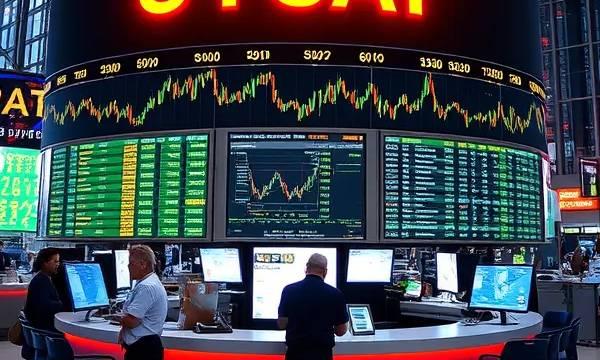
- Global stock market trading floor displaying financial charts and market activity.
- Investor reviewing portfolio performance on a laptop from a home office.
- Financial advisor explaining market trends and investment strategies to clients.
- Young entrepreneur analyzing a business financial dashboard in a modern office.
- Person using a smartphone banking app to manage budgeting and investments.
- Stacked gold coins beside a rising financial graph symbolizing long-term wealth growth.
- Modern financial district skyline with digital stock exchange displays representing the global economy.
Leave a Reply